


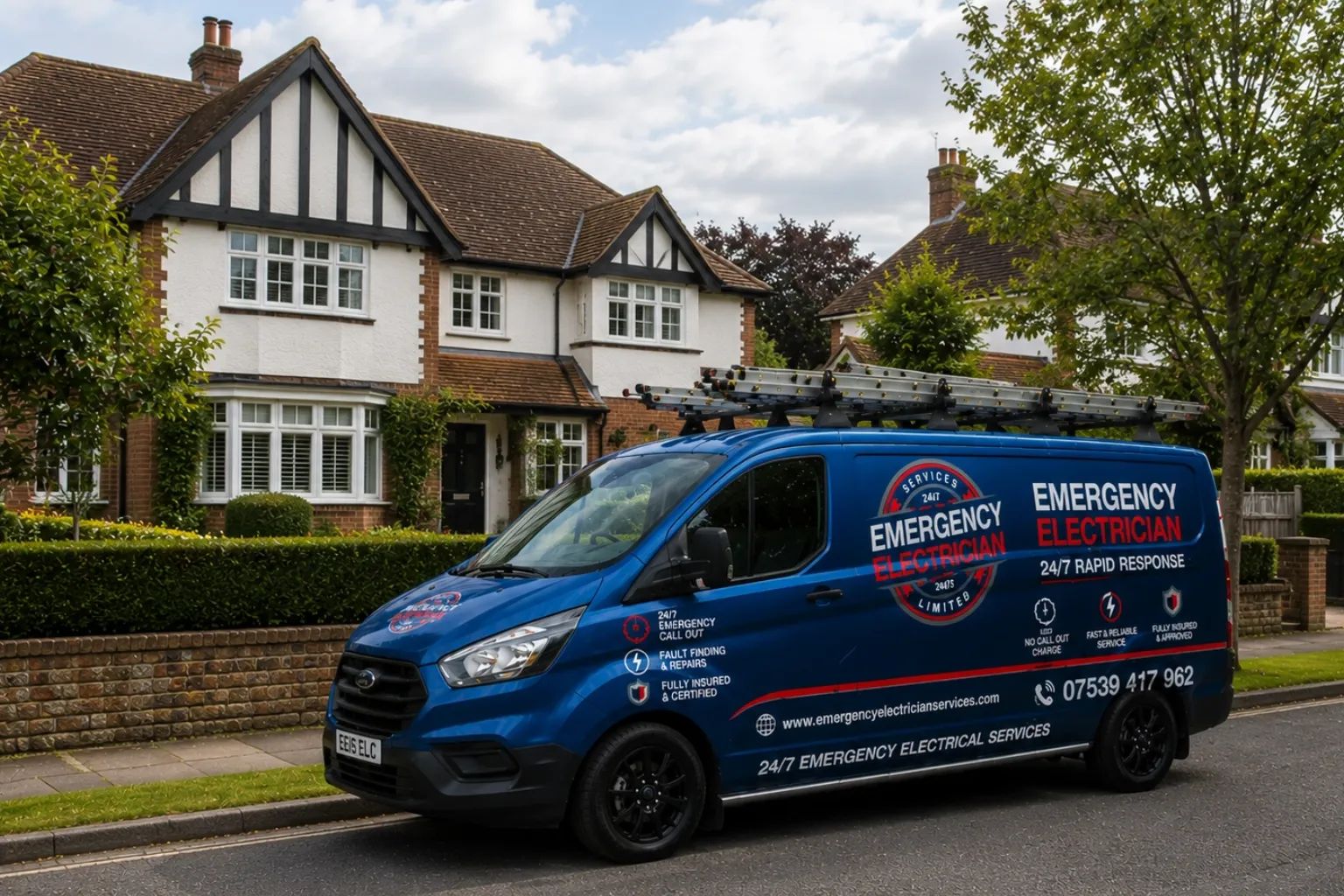
An unexpected electrical fault can leave you with two immediate concerns: whether your property is safe and how much professional help will cost. Understanding an emergency electrician cost starts with knowing what the quoted price actually covers.
The final bill can include attendance, fault finding, repair labour and replacement parts. The time you call and the nature of the problem can also affect the charge. Before you book a call out electrician, ask for the initial price and an explanation of how any further work will be charged.
How Much Does an Emergency Electrician Cost?
There is no single price that applies to every emergency electrical visit. For general UK guidance, Checkatrade’s cost guide, updated in May 2026, gives an indicative emergency labour rate of around £80–£100 per hour. A separate call-out fee may apply. UK Day Rates & Call-Out Costs.
This is a market estimate, not a quotation from Emergency Electrician Services. It should not be treated as the total repair price. Your actual charge needs to reflect your postcode, appointment time, the fault and any materials required.
Emergency Electrician Services provides upfront pricing before work begins. When contacting our team, explain what has happened and ask us to confirm the attendance charge and applicable rates. Fast Call-Outs.
What Is the Difference Between a Call-Out Fee and Repair Costs?
The call-out fee is the charge for attending your property under the agreed booking terms. Depending on the electrician’s pricing structure, it may include an initial assessment or a specified amount of labour.
Repair costs relate to the work needed to resolve the fault. These may include further testing, additional labour, replacement components and checks following the repair.
A low advertised call-out price does not automatically mean a lower total bill. One quotation might include the first hour, while another adds labour from the moment the electrician arrives. Compare what each price includes before deciding.
What Affects Your Emergency Electrician Call-Out Price?
1. When You Need Attendance
Evening, overnight, weekend and bank holiday attendance can attract different rates from a planned daytime appointment. Confirm which rate applies to your booking and whether a minimum charge is payable.
If you are unsure whether the problem can wait, describe it to an electrician and ask for advice. A suspected dangerous fault needs prompt attention, even when an out-of-hours visit costs more.
2. Your Location and Access
Your postcode helps the electrician confirm availability and attendance arrangements. Ask whether travel, parking or any other access-related charge is included in the quoted amount.
Provide clear access instructions, particularly for flats, gated developments and commercial buildings. If someone needs to authorise entry or unlock an electrical cupboard, arrange this before arrival to avoid unnecessary delays.
3. How Difficult the Fault Is to Identify
The visible symptom does not always reveal the underlying problem. A circuit that trips repeatedly could require investigation across several parts of the installation.
This is why an electrician may confirm the attendance rate by telephone but need to test the installation before quoting for the repair. Our electrical fault-finding guide explains how electrical problems are investigated.
Give an accurate description of the symptoms rather than guessing which component needs replacing. Useful details include when the issue started, which areas are affected and whether anything changed immediately beforehand.
4. The Parts and Repairs Required
Some visits involve diagnosing a fault and making the affected circuit safe. Others require replacement parts or further repair work.
Ask whether the quoted amount includes materials and whether sourcing a component will affect the price. If further work is recommended, request an explanation of what is needed and how much it will cost before agreeing.
5. Whether Further Attendance Is Needed
Making a property safe and completing a permanent repair may be separate stages. For example, an affected circuit may need to remain isolated while suitable parts or additional work are arranged.
Before the electrician leaves, establish what has been completed, what remains unavailable and whether another appointment is required. Confirm any further charges so you can budget for the complete repair.
What Should You Ask Before Booking a Call Out Electrician?
A clear conversation before attendance can help prevent misunderstandings. Ask:
- What is the initial attendance charge?
- Does it include fault finding or the first hour of labour?
- What rate applies after the included time?
- Is additional time billed by the hour or in smaller increments?
- Does the price include VAT, where applicable?
- Are materials, travel or parking charged separately?
- Will you ask for approval before carrying out additional work?
- What charges apply if a second visit is necessary?
Request the booking details in writing where possible. Keep the agreed scope clear, especially if the immediate appointment is for assessment and making safe rather than a complete repair.
An Example of How to Compare Prices
Imagine one electrician quotes an attendance fee that includes an hour of labour. Another quotes a smaller attendance fee but charges separately for all time on site.
The second option may initially look cheaper. Once labour is added, the total could be higher.
Compare the likely total for the same scope of work, including applicable VAT and materials. If the fault has not yet been diagnosed, ask how the electrician will communicate the next stage and obtain your approval.
When Should You Prioritise Urgent Help?
A burning smell, sparking electrical equipment or visibly damaged wiring warrants urgent professional advice. Avoid touching affected equipment and do not repeatedly reset a circuit that keeps tripping.
If there is smoke or fire, leave the property and call 999. Only switch off the electricity if you can do so safely, without approaching damaged equipment or entering a hazardous area.
For further guidance, read our complete guide to electrical emergencies. Understanding the warning signs can help you explain the problem when requesting assistance.
Emergency Electrical Costs for Businesses
For a business, an electrical fault can also disrupt trading, equipment use or access to parts of the premises. Tell the electrician which areas are affected and whether there are restrictions on access.
If the immediate repair cannot be completed, ask what must remain isolated and what follow-up work is required. Our commercial emergency electrician service supports businesses dealing with urgent electrical problems.
Get Clear Pricing for Your Emergency Electrical Visit
Emergency Electrician Services is available 24 hours a day, seven days a week for urgent electrical faults. We provide upfront pricing before work begins and help you understand the next steps.
Call 07539 417 962 or contact our team with your postcode and a description of the problem. Ask us to confirm engineer availability, the initial charge and how any additional work will be priced.
Frequently Asked Questions
Emergency electrician costs depend on your location, attendance time, fault complexity and required parts. Ask for the initial attendance charge, any included labour, subsequent hourly rates and VAT before booking. A confirmed quote is more useful than a headline price.
A call-out fee may cover travel, attendance and an initial assessment. Some electricians include the first hour of labour, while others charge separately. Always confirm exactly what is included, whether repairs cost extra and how additional time will be billed.
Emergency electricians may charge higher rates overnight, at weekends and on bank holidays because attendance falls outside normal working hours. Ask which rate applies when booking. If there is a potential safety risk, seek urgent advice rather than delaying assistance.
You can usually confirm attendance charges before arrival, but an exact repair price may require testing. Describe the symptoms clearly and request the charging structure upfront. Once the fault is identified, ask for approval of costs before additional work begins.
Some faults can be repaired during the first visit, depending on their cause and available parts. Complex problems may need further work. The immediate priority is making the affected installation safe, with any follow-up repairs and charges explained before proceeding.
Before booking, confirm the attendance fee, including labour, hourly rate, VAT and possible materials charges. Ask how additional work is authorised and whether another visit costs extra. Request a written breakdown so you understand the agreed scope and payment terms.
